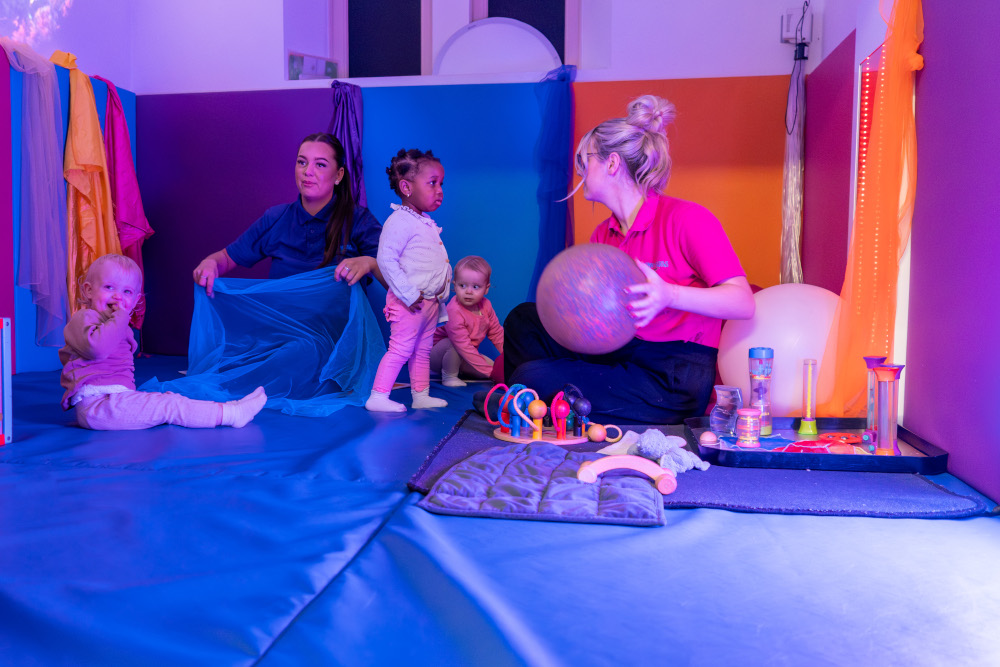
Sunny Meadows now has a fun new sensory room
Sensory rooms offer a vital, therapeutic space within a nursery setting, significantly benefiting children by providing a controlled environment for sensory exploration and regulation. The carefully designed features, such as soft lighting, textured materials, gentle sounds, and visual projections, allow children to engage with stimuli at their own pace. For young children who are still developing the ability to process the overwhelming amount of information from their environment, the sensory room acts as a safe haven. This is particularly crucial for children who may be overstimulated or understimulated by the typical bustle of a classroom, enabling them to find their optimal state of arousal, which is essential for emotional well-being and readiness to learn.
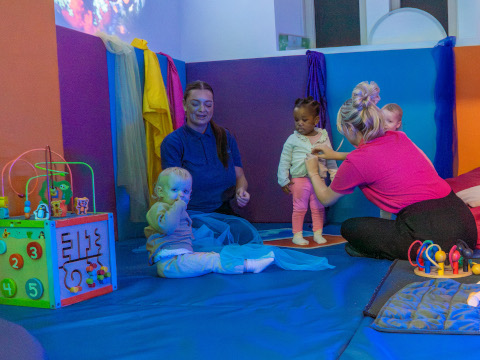
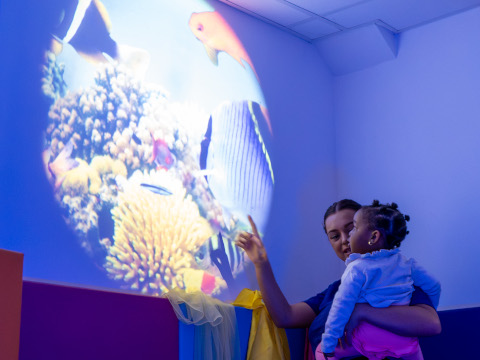
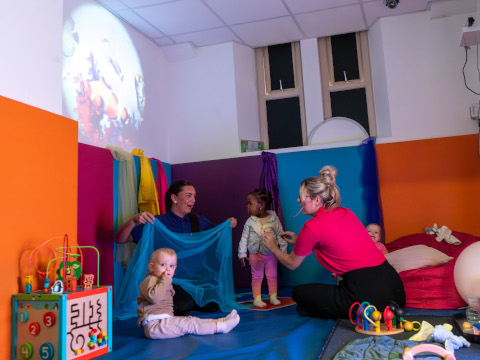
One of the primary benefits of a sensory room is its capacity to enhance learning and development across multiple domains. By interacting with various sensory tools, children can improve their gross and fine motor skills, their hand-eye coordination, and their spatial awareness. For instance, reaching for a light bubble tube or manipulating a soft sensory ball strengthens muscle control and coordination. Furthermore, the room encourages focused attention and cognitive development. When a child can effectively filter out distracting stimuli, they are better able to concentrate on specific tasks or explore cause-and-effect relationships, such as how their movement affects a projector display. This focused, multi-sensory engagement builds stronger neural pathways supporting future learning success.
Our Focus
Finally, the sensory room plays a key role in supporting children’s social and emotional development. It can be used as a calming space to help children de-escalate during moments of distress, frustration, or anxiety, teaching them valuable self-regulation skills they can transfer to other settings. A child learning to seek out the quiet corner or the weighted blanket when feeling overwhelmed is developing emotional intelligence and coping mechanisms. When the room is used for small-group activities, it can also promote positive social interactions, encouraging communication, sharing, and parallel play around a shared sensory experience. In this way, the nursery’s sensory room becomes an indispensable tool for nurturing a well-rounded, emotionally resilient, and engaged learner.